Understanding Bowling Green's Unique Karst Geology
Bowling Green sits in the heart of Kentucky's karst region, a geological landscape shaped by the dissolution of limestone and other soluble bedrock. This creates sinkholes, underground caverns, and unpredictable ground settlement patterns that most homeowners don't think about until their driveway starts cracking. The karst terrain is beautiful and historically significant, but it presents real challenges for driveway installation and longevity.
When you're choosing between asphalt and concrete for your driveway in Bowling Green, understanding how each material responds to ground movement is critical. Karst subsidence (the gradual sinking of the surface as underground voids collapse) can damage rigid materials more severely than flexible ones. This geological reality should influence your decision from the start.
Concrete Driveways: Rigidity Meets Karst Challenges
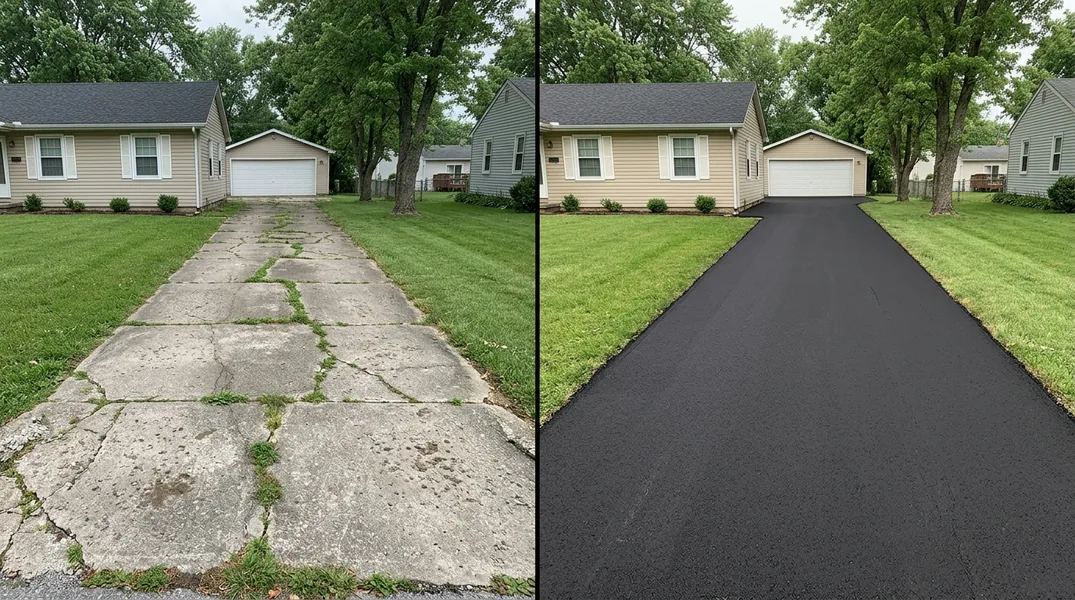
Concrete is rigid and unforgiving. When installed over karst terrain, it cannot flex or adjust to minor ground shifts without cracking. Even small movements in the substrate can cause concrete to develop spider web patterns of cracks, and once concrete cracks, water infiltrates the base layers, accelerating deterioration. In karst regions, where ground movement is not a question of if but when, concrete's inflexibility becomes a significant liability.
The cost of repairing a concrete driveway damaged by karst subsidence is often higher than the cost of the original installation. You may need to remove and replace entire sections, or worse, address the underlying ground issue before any surface repair makes sense. Concrete also absorbs water more readily than asphalt, and in Bowling Green's humid climate with seasonal freeze-thaw cycles, this water absorption accelerates surface deterioration and spalling (flaking of the top layer).
Asphalt Driveways: Flexibility and Karst Compatibility
Asphalt Driveway Paving & Installation is engineered to flex slightly under stress, which is exactly what you need in karst terrain. When minor ground settlement occurs, asphalt can shift and settle without immediately cracking. This flexibility buys you time and reduces the severity of damage. Instead of a network of cracks appearing suddenly, you might see minor surface irregularities that can be addressed through Asphalt Resurfacing & Overlay or Driveway Repair before major structural failure occurs.
The Asphalt Driveway Paving & Installation process also allows for better drainage when properly graded. Water sheds off the surface rather than being absorbed, reducing the risk of subsurface saturation that can trigger or accelerate karst subsidence. A well-installed asphalt driveway in karst country is more forgiving, more maintainable, and ultimately more cost-effective over its lifetime.
Asphalt Driveway Lifespan in Karst Terrain: What to Expect
The asphalt driveway lifespan in a stable environment typically ranges from 15 to 20 years with proper maintenance. In karst terrain like that found around Bowling Green, you should expect the lower to middle end of that range, depending on subsidence activity in your specific area. Some properties experience minimal ground movement, while others sit above more active karst features. The good news is that asphalt's flexibility means you can extend its life through proactive maintenance like seal coating and crack filling.
Regular seal coating every two to three years protects asphalt from oxidation, water penetration, and UV damage. In karst regions, this maintenance becomes even more important because it prevents water from seeping into small cracks and destabilizing the base. Pothole Repair & Asphalt Patching can address damage quickly and affordably before it spreads. By staying on top of maintenance, many homeowners in karst areas extend their blacktop driveway life to 18 to 22 years or more.
Asphalt Over Concrete: A Hybrid Solution for Problem Areas
Some homeowners ask whether they can place asphalt over an existing concrete driveway. In stable terrain, this can work as a cost-saving measure. However, in karst regions, asphalt over concrete driveway installations are risky. If the concrete beneath is already cracking from ground movement, laying asphalt on top will not solve the underlying problem. The asphalt will simply mirror the cracks in the concrete below, and you'll end up with the same damage pattern you were trying to avoid.
If you're considering an overlay, have a professional inspection first. The concrete base must be structurally sound, and the underlying ground must show no signs of active subsidence. In most karst areas, removing the old concrete and installing a fresh asphalt base is the smarter long-term investment. It gives you a chance to improve drainage, assess ground stability, and start fresh with a material designed to handle the unique challenges of your region.
Cost Comparison: Asphalt vs. Concrete in Bowling Green Karst Country
When comparing initial installation pricing, asphalt is typically 30 to 40 percent less expensive than concrete. For a typical residential driveway, this difference can amount to thousands of dollars. However, the real financial advantage of asphalt in karst terrain becomes apparent over time. Because asphalt is more forgiving of ground movement, repair costs are lower and less frequent. You're also more likely to avoid the catastrophic repairs that sometimes accompany concrete failure in unstable ground.
Consider the total cost of ownership over 20 years, not just the installation price. Asphalt requires regular maintenance (seal coating, crack filling, patching), but these are predictable, manageable expenses. Concrete may seem cheaper upfront, but a single major repair due to karst subsidence can exceed the cost of installing asphalt in the first place. For homeowners in Bowling Green, asphalt makes financial sense.
Making Your Decision: When to Call Bowling Green Asphalt Paving
If you live in karst terrain and are planning a new driveway or replacing an existing one, asphalt is the smarter choice. Its flexibility, lower cost, easier maintenance, and proven performance in areas with ground movement make it ideal for Bowling Green and surrounding karst regions. Concrete may look polished and modern, but it's not engineered for the geological realities of your area.
The professionals at Bowling Green Asphalt Paving understand karst terrain intimately. We've installed hundreds of driveways in the region and know which solutions work best for specific properties and ground conditions. If you're unsure whether your property is at risk for subsidence, or if you want expert guidance on material selection, contact us for a free estimate. You can also reach us at (270) 938-6628 to discuss your project. We're here to help you make an informed decision that will serve you well for years to come.
Looking for a professional asphalt paving contractor in Bowling Green? Bowling Green Asphalt Paving responds fast for all your asphalt paving needs.
Get a Free Quote